

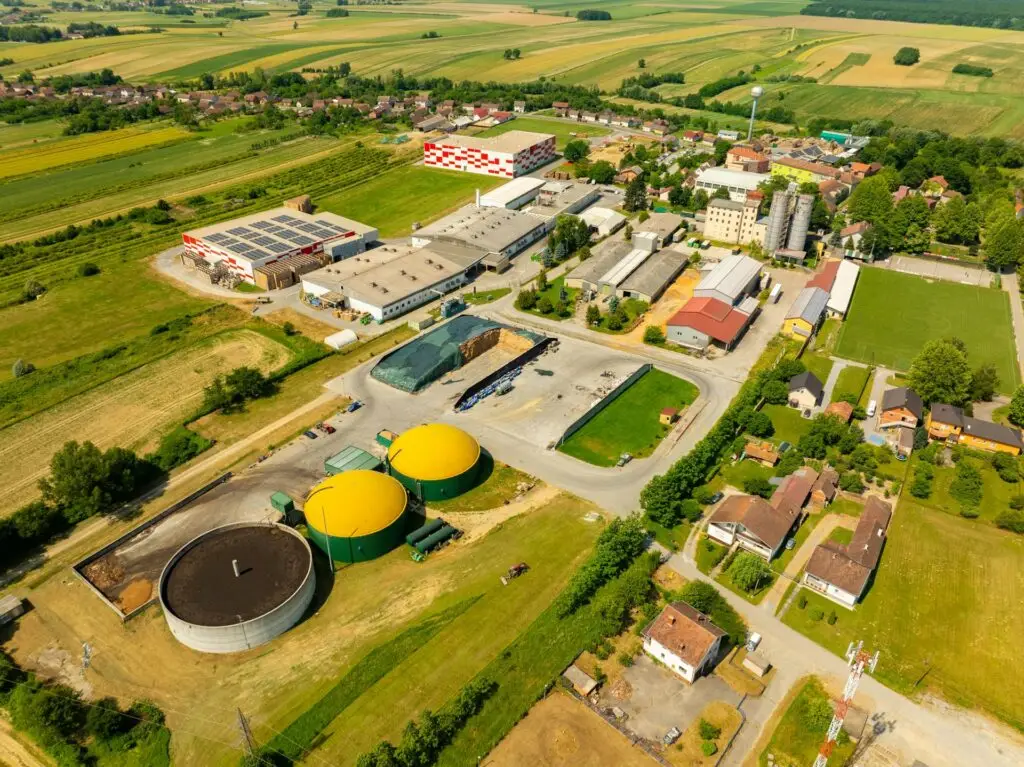
At Orbis Environmental LTD, we have worked across many sectors, but one area where we have seen significant growth and developed deep technical expertise is in the anaerobic digestion (AD) and biogas industry. Over the last three years — and particularly in the past twelve months — we have supported numerous projects in this field, including a wide variety of developing markets and emerging facilities across rural parts of England and Ireland.
Growth and Funding
Much of this activity has been driven by investment, acquisitions, and government-backed initiatives that provide funding or grants for agricultural businesses to develop anaerobic digestion facilities directly on their sites.
In many cases, these projects represent a major step forward in sustainability and efficiency for farms, transforming organic waste into renewable energy. However, they also come with specific safety and operational challenges — especially when the individuals responsible for running the plant are also managing the wider demands of agricultural life.
Evolving Landscapes
We have found that many plant managers in these rural facilities are also farmers, engineers, or site owners, juggling livestock, crops, and machinery alongside the running of their AD plant. In these cases, we focus on providing support that is both practical and easy to implement — helping people understand which safety measures are most critical and identifying small changes that can make a significant difference.
For example, we have worked with several sites where pump rooms are situated between digesters. Some of these facilities have excellent ventilation and gas detection systems, helping them identify and resolve leaks quickly. However, others lack adequate airflow or leak management. In one instance, we identified that gas from a small leak could build up within an enclosed pump room, creating a potentially hazardous Zone 2 environment. With a simple solution — such as installing low-cost wall vents at strategic locations — we were able to ensure cross-ventilation. Because these rooms typically back onto open outdoor spaces, the solution was cost-effective and prevented the creation of hazardous atmospheres.
Another issue we have seen repeatedly involves the pressure relief valves (PRVs) on top of digesters. These are designed to prevent over-pressurisation, but we have observed that some valves are either too sensitive or have been incorrectly modified. In one example, a PRV had such a low differential pressure that even a minor increase inside the digester caused gas to seep out — potentially into the pump room or other sensitive areas below. Worse still, we found instances where PRVs were mechanically restricted or capped in a way that prevented them from functioning safely. This can result in gas accumulation and a dangerous increase in pressure.
Our approach to resolving this involves the use of correctly specified spring-loaded safety valves, calibrated to release only when safe pressure thresholds are exceeded. This ensures pressure relief when truly needed, without constant low-level seepage due to wind gusts or small fluctuations in internal pressure.
Practical Site Examples: Where Small Changes Make a Big Difference
When completing hazardous area classification studies, one of the most frequently asked questions is whether equipment inside a digester — such as mixing paddles or motors — must be ATEX rated. In almost every case, the internal atmosphere of a digester is considered hazardous. However, by implementing practical control measures — such as ensuring the slurry level never drops below a certain point — the mixing paddles and rotors remain submerged at all times. If robust controls and clear procedures are in place to maintain this liquid level, the space beneath the slurry line may not need to be classified as a hazardous area. This can have a meaningful impact on maintenance costs and compliance requirements.
We have also provided similar advice for external components, such as lagoons, valve chamber pits, interceptors, and pumping stations. In each of these scenarios, the risks can be managed effectively through careful analysis, zoning, and straightforward control measures. These are not complicated systems — but the safety outcomes hinge on getting the detail right and understanding how gases behave in and around open or partially enclosed structures.
A particularly important scenario we often see relates to connection points and valves on gas pipework. According to the Energy Institute and British Standards, it is generally expected that these points represent high-risk locations, requiring localised hazardous zoning due to the potential for gas leaks. However, truly understanding the dynamics of each individual plant is crucial. In some cases — especially when an engine or CHP unit is operating and pulling gas through under vacuum — these sections of pipework may actually draw in air rather than release gas if there is a breach. Recognising this subtle but critical detail can be the difference between over-classifying an area as hazardous or implementing zoning that accurately reflects the true operational risk.
Understanding the Risk Landscape
Anaerobic digestion involves the controlled breakdown of organic material in an oxygen-free environment, producing biogas — a methane-rich and highly flammable substance. If not correctly controlled, biogas presents a serious explosion hazard, along with risks related to pressure, toxic gas exposure, and environmental release.
As a specialist consultancy with deep experience in DSEAR (Dangerous Substances and Explosive Atmospheres Regulations 2002) and the ATEX Directives (99/92/EC and 2014/34/EU), we help AD operators identify and manage these risks across all parts of their facility, as well as IEC 60079 and Energy Institute standards. This includes:
- Identifying all flammable gases and vapours on site, including methane, hydrogen sulphide, and ammonia.
- Conducting site-specific DSEAR risk assessments for all gas production, upgrading, storage, and utilisation systems.
- Accurately classifying hazardous zones in and around digesters, pipework, gas storage units, CHP engines, and flare stacks.
- Ensuring all electrical and mechanical equipment used in zoned areas is ATEX rated and correctly specified.
- Improving ventilation and detection systems to avoid the build-up of dangerous gases.
- Training operational teams to understand site risks, emergency procedures, and practical mitigation measures.
Specialist Training and Industry Engagement
We have noticed a clear gap in practical, site-specific training resources for the biogas industry. Many operators, managers, and duty holders struggle to find structured, tailored guidance on how to manage explosive atmospheres and comply with DSEAR.
To address this, we have developed a dedicated three-stage training programme:
- Operators — a half-day course focused on day-to-day safety, equipment use, and immediate hazard awareness.
- Responsible Persons — a one-day course covering supervisory responsibilities, system oversight, and procedural implementation.
- Duty Holders and DSEAR Coordinators — a two-day course providing in-depth understanding of legal obligations, overall risk management, and long-term compliance strategies.
We have delivered these programmes to many clients across the sector, helping teams build the competence and confidence to manage their specific risks effectively.
In addition to our consultancy and training services, we actively support and engage with the wider industry. We have worked closely with the Anaerobic Digestion and Bioresources Association (ADBA) and are proud to exhibit at the annual World Biogas Expo at the NEC Birmingham. These collaborations allow us to share insights, connect with operators, and continue advancing safety standards across the sector.
A Sector on the Rise — And a Responsibility to Get Safety Right
The growing demand for sustainable energy and the push towards decarbonisation has made anaerobic digestion more relevant than ever. This sector is no longer just about waste management — it is becoming a vital component of the UK’s renewable energy strategy.
However, as this industry expands — especially into rural and agricultural contexts — there is a real risk that critical safety standards are misunderstood or overlooked. We have seen how quickly standards can slip, particularly when facilities are adapting to new technologies, scaling up operations, or facing changes in ownership.
At Orbis Environmental, we invest heavily in our technical understanding of AD systems. Our support is not theoretical — it is based on hundreds of hours on site, engaging directly with operators, farmers, plant managers, and engineers. Whether we are updating hazardous zoning plans, inspecting ventilation systems, or delivering on-site training, our goal is to deliver grounded, practical safety advice that empowers clients to act with confidence.
Looking Ahead
Our journey in the anaerobic digestion and biogas sector is one of the most rewarding aspects of our work. We have grown alongside this industry — and we remain committed to it. The challenges are complex, but the opportunities are significant. Our clients are helping drive a circular, low-carbon economy — and we are proud to play a part in helping them do it safely.
We have worked with brand new facilities that are fully compliant and built to the latest standards, as well as with sites that have been acquired and require substantial upgrades to become compliant. We have identified equipment and processes that were unsuitable or unsafe and worked closely with site management teams to implement immediate controls. Crucially, even when we encounter serious issues, we always find solutions that avoid unnecessary disruption. We have never needed to recommend extreme measures such as shutting a plant down unnecessarily. Instead, we focus on practical, phased improvements that allow facilities to remain operational while achieving compliance and improving safety standards.
If you operate an anaerobic digestion facility and want to understand your DSEAR obligations, assess your risk controls, or receive tailored training and technical support, we would be pleased to hear from you.
This article is written by the CEO and Technical Director of Orbis Environmental, a specialist health and safety consultancy supporting the anaerobic digestion, biogas, and energy-from-waste sectors throughout the UK and Ireland.